
Augmented Reality in Aerospace and Defence Visual Inspection
Meeting aerospace and defense quality standards with AR inspection
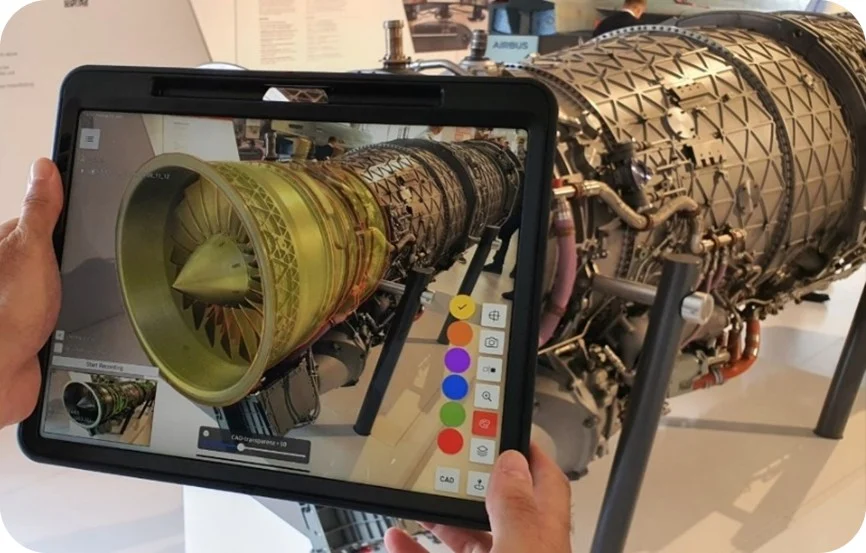
Augmented reality in aerospace and defence visual inspection is the use of AR to place digital engineering data, such as CAD geometry and inspection checkpoints, over a physical aircraft, vehicle or component. Inspectors see the nominal design and the real assembly in the same view. They can then check whether brackets, fasteners, panels, harness supports and other components are present, correctly positioned and complete. The method suits large, complex assemblies with many installed parts, where paper drawings and manual cross-referencing make visual checks slow and open to interpretation.
SuPAR is an augmented reality visual inspection platform for manufacturing, and aerospace and defence is one of the industries it serves. SuPAR overlays CAD data, inspection checkpoints and visual guidance onto the physical part. This helps make inspection more structured, visual and traceable for your quality team, from fuselage and composite assemblies to armored vehicles and jet engine component assemblies.
Aerospace & Defence
SuPAR supports the stringent quality requirements of aerospace and defense manufacturing. AR-based inspection enables accurate verification of helicopter bodies, armored vehicles, fuselage assemblies, and jet engine components in complex, large-scale environments.
By overlaying virtual CAD and inspection data directly onto physical platforms, SuPAR helps detect missing, misaligned, or incorrect components early in the process. From investment casting wax model geometry checks to fuselage Stage 2 wing and canopy assembly verification, interactive AR inspection reduces verification time while providing reliable digital reporting.
SuPAR supports aerospace-specific workflows including fixture and jig assembly with Physical-Digital Mock-Up guidance, jet engine maintenance and training, and CT data AR visualization for defect root analysis in critical components.
How does augmented reality in aerospace inspection work?
Augmented reality in aerospace inspection works by aligning the digital model with the physical assembly, then guiding the inspector through defined checkpoints. In general, the value comes from removing the mental step of translating a 2D drawing onto a 3D structure.
SuPAR splits this into preparation and execution. In SuPAR Composer, engineers import existing CAD data from systems such as CATIA, Siemens NX or PTC Creo, or from neutral formats such as JT and STEP. Composer generates tracking geometry automatically and lets engineers define inspection checkpoints, annotations and reusable inspection templates. Confirm specific formats during evaluation.
On the shop floor, the SuPAR App runs on a LiDAR-enabled iPad Pro. It overlays nominal CAD geometry on the part through real time AR tracking. Edge comparison highlights matching and non-matching areas in green and red, which makes missing, extra or misaligned components visible. Inspectors pin findings as 3D notes with a photo, comment and symbol directly on the component.
Which assemblies suit augmented reality in aerospace and defence?
Augmented reality in aerospace and defence suits assemblies where many components must be verified against a CAD reference by eye. Typical applications include:
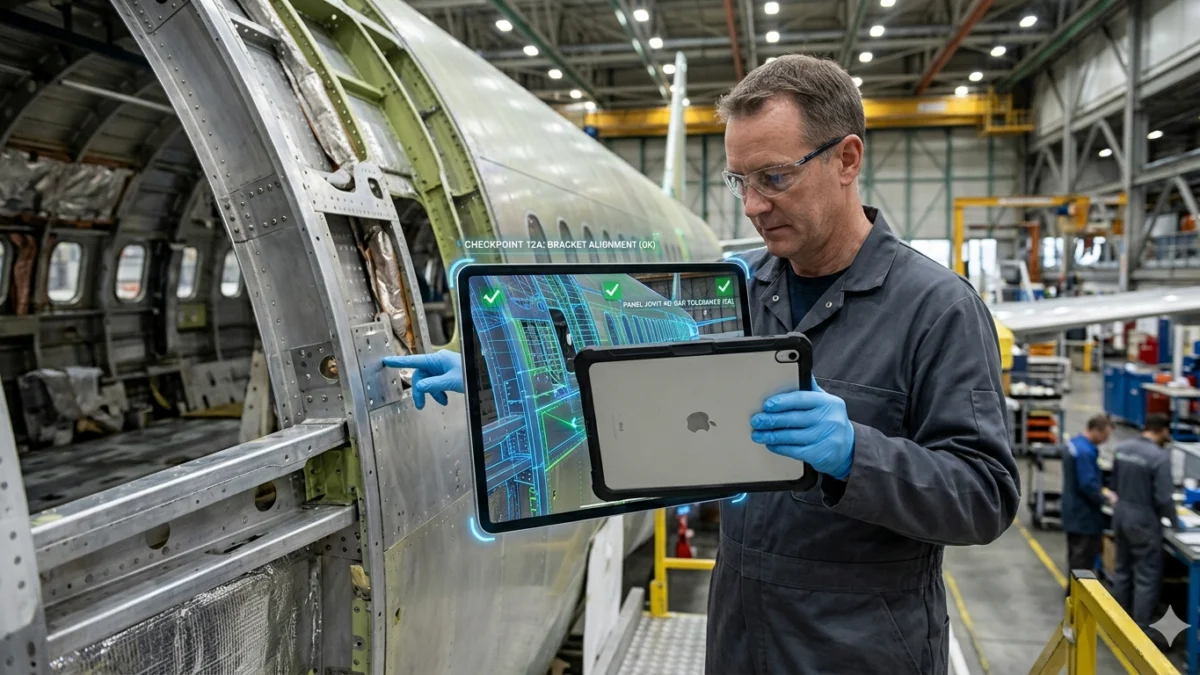
- Fuselage, wing and canopy assemblies, including target-based visual checks of brackets and supports
- Composite assemblies and large structural components with thousands of installed parts
- Helicopter bodies, covering panels, access doors, hinges, seals, windows and drain holes
- Interior and cabin components, where placement and completeness can be compared with the design
- Armored defence vehicles, with visual verification of armor panels, brackets and mounted equipment
- Jet engine component assemblies, compared visually with the CAD model during build and maintenance
- Tooling, fixtures and jigs, checked for correct component placement before production use
SuPAR also supports step-by-step assembly guidance through partial tracking. Operators see correct placement and sequence on the physical-digital mock-up, which is useful for engine maintenance workflows and AR training. For selected repetitive targets such as holes or studs, SuPAR AI adds automated visual verification. Its suitability depends on training data, imaging conditions, process variation and validation, so it is scoped for suitable repetitive targets under defined operating conditions.
How does augmented reality in aerospace support first article inspection?
Augmented reality in aerospace supports first article inspection on its visual side: confirming that the right components are present, in the right position and in the right configuration. In general, first article inspection also includes a dimensional part, which aerospace manufacturers handle with CMMs, gauges and 3D scanning.
SuPAR covers the visual and positional verification portion. Inspectors walk through the first article with CAD overlaid, confirm each inspection checkpoint, and record findings on the 3D model. SuPAR complements, and does not replace, dimensional measurement systems such as CMMs. Where scanning data already exists, the SuPAR App can display GOM or CREAFORM color map overlays and CT scan data on the part. These visualize externally produced data, so the underlying data stays with the systems that produce it.
How does augmented reality in aerospace improve traceability?
Augmented reality in aerospace improves traceability by capturing each finding in a digital record tied to its location on the 3D model. In general, aerospace and defence programmes require clear evidence of what was checked, by whom and with which result.
SuPAR generates reports in PDF, Excel, Word and 3D formats from the inspection session. This reduces dependence on paper-based methods and transcribed notes. The free SuPAR Web Viewer opens reports on the 3D model in a browser with no installation, so engineering and supplier teams can review findings in context. When specialist input is needed, inspectors can connect through Microsoft Teams and share the digital twin as a 3D hologram, which supports remote visual inspection across sites.
What results has FACC reported with augmented reality in aerospace?
FACC has reported shorter inspection times after applying augmented reality in aerospace production with SuPAR. FACC is an Austrian aerospace company that develops and produces lightweight composite components and systems for aircraft.
According to the FACC success story, FACC used SuPAR to inspect a 13-meter-long wing component containing thousands of installed parts. FACC reports that the inspection process went from two shifts to just a few hours. FACC also reports 50 to 60% less inspection time and 70% faster documentation and non-conformity reporting. Results depend on the application and system configuration, so these figures describe FACC’s use case rather than a general benchmark.
What are the limits of augmented reality in aerospace inspection?
Augmented reality in aerospace inspection is limited to visual presence, position and absence verification. SuPAR does not quantify geometry, does not evaluate tolerance limits and does not stand in for non-destructive testing.
In practice, your quality team keeps CMMs, gauges, scanning and NDT for the checks they are designed for. SuPAR adds a structured visual layer on top: it can help reduce interpretation variability, makes missing, extra or misaligned components visible, and keeps findings linked to the CAD model. How inspection reports flow into your existing quality systems is worth discussing during evaluation.
If you want to see how this applies to your fuselage, engine or defence vehicle assemblies, request a demo with your own CAD data.
Augmented Reality in Aerospace FAQ
What is augmented reality in aerospace quality control?
Augmented reality in aerospace quality control overlays CAD geometry and inspection checkpoints on physical aircraft or defence assemblies, so inspectors compare design and reality in one view. It supports visual checks of presence, position and completeness. Dimensional verification remains with CMMs, gauges and scanning systems, which AR complements rather than substitutes.
Can augmented reality in aerospace be used for first article inspection?
Yes, augmented reality in aerospace can support the visual and positional part of first article inspection. Inspectors confirm that components are present, correctly placed and complete against the CAD reference, then record findings on the 3D model. The dimensional part of first article inspection still requires dedicated measurement equipment such as CMMs.
Which defence products suit augmented reality in aerospace and defence inspection?
Armored vehicles, helicopter bodies, fuselage structures and jet engine component assemblies suit augmented reality in aerospace and defence inspection. These products combine large structures with many brackets, panels and mounted components. Suitability depends on CAD data availability, part size, lighting and the visual nature of the checkpoints you need to verify.
Does augmented reality in aerospace work with composite assemblies?
Augmented reality in aerospace works with composite assemblies where installed components need visual verification against CAD. FACC, a composite aerospace manufacturer, used SuPAR on a 13-meter wing component with thousands of installed parts. AR verifies visible presence and position; internal composite quality still requires NDT or CT methods.
What CAD data does augmented reality in aerospace inspection need?
Augmented reality in aerospace inspection needs a usable 3D CAD model of the assembly. SuPAR Composer imports native CATIA, Siemens NX, PTC Creo, SolidWorks and Inventor files, plus neutral formats such as JT and STEP. Further formats are supported, so confirm your specific CAD formats and data structure during evaluation.
Fuselage & Wing Assembly Check
AR-based assembly inspection for fast and accurate verification of fuselage Stage 2, wing, and canopy assemblies. Simplifies inspection in large and complex environments with target-based checks for brackets and supports.
Helicopter Body Targets Inspection
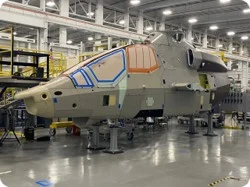
AR-supported visual inspection for fast and accurate verification of helicopter body panels and access doors. Check drain holes, inspect glass and acrylic windows for damage, and ensure seals and hinges are in proper condition.
- Inspect panels and access doors for fitment and latching
- Ensure drain holes are clear
- Detect scratches, cracks, or fogging in windows
- Verify seals and hinges on doors and hatches
Armored Defence Vehicle Inspection
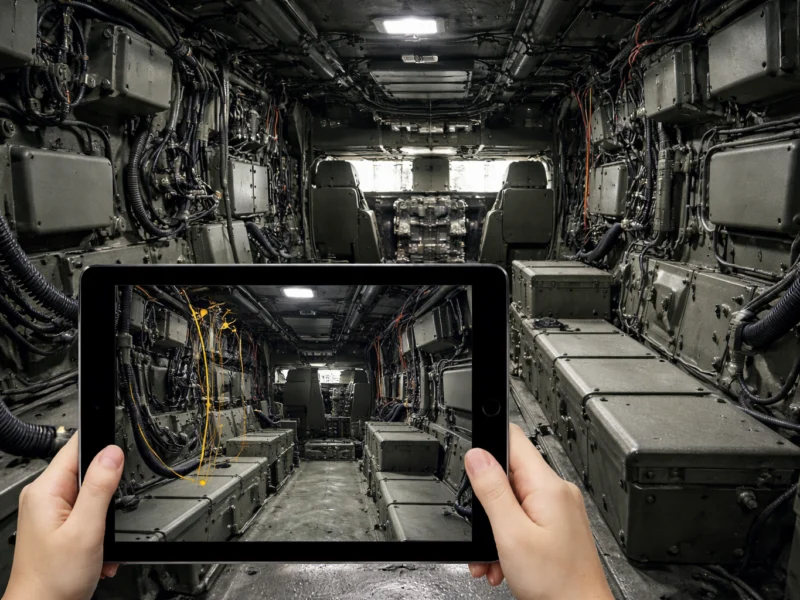
Accurate and secure inspection of armored defence vehicles by overlaying virtual CAD and inspection data directly onto the physical platform. Verify complex vehicle structures, armor panels, brackets, and subassemblies in real time.
- Real-time verification of armor panels and brackets
- Detect missing, misaligned, or incorrect components
- Reduced inspection time
- Digital reporting for quality assurance and readiness
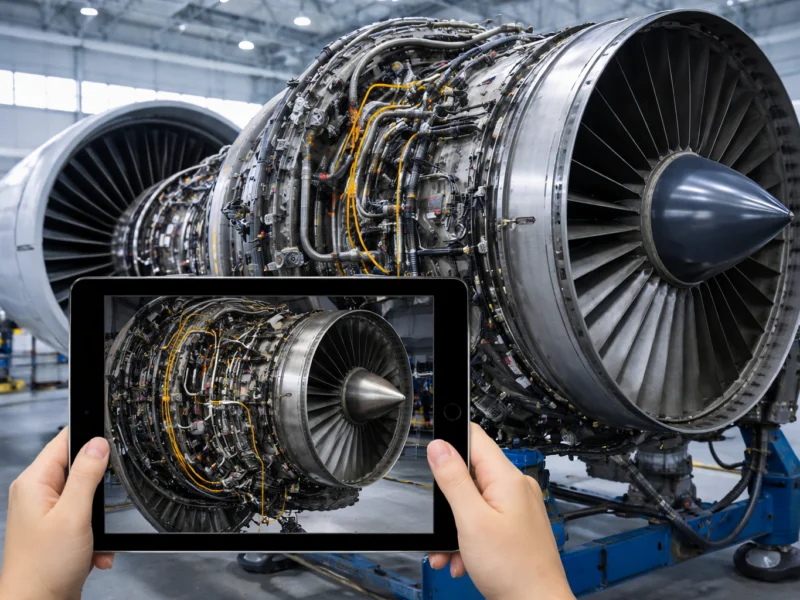
Jet Engine Assembly & Maintenance
AR-based visual inspection for jet engine assembly and maintenance. Verify complex engine components including combustion chambers against CAD data, support maintenance workflows, and provide training guidance with real-time AR overlay.
- Engine component geometry visual inspection
- Combustion chamber verification
- Maintenance workflow support
- Training guidance with AR overlay