
Quality Control in Manufacturing: A Complete Guide
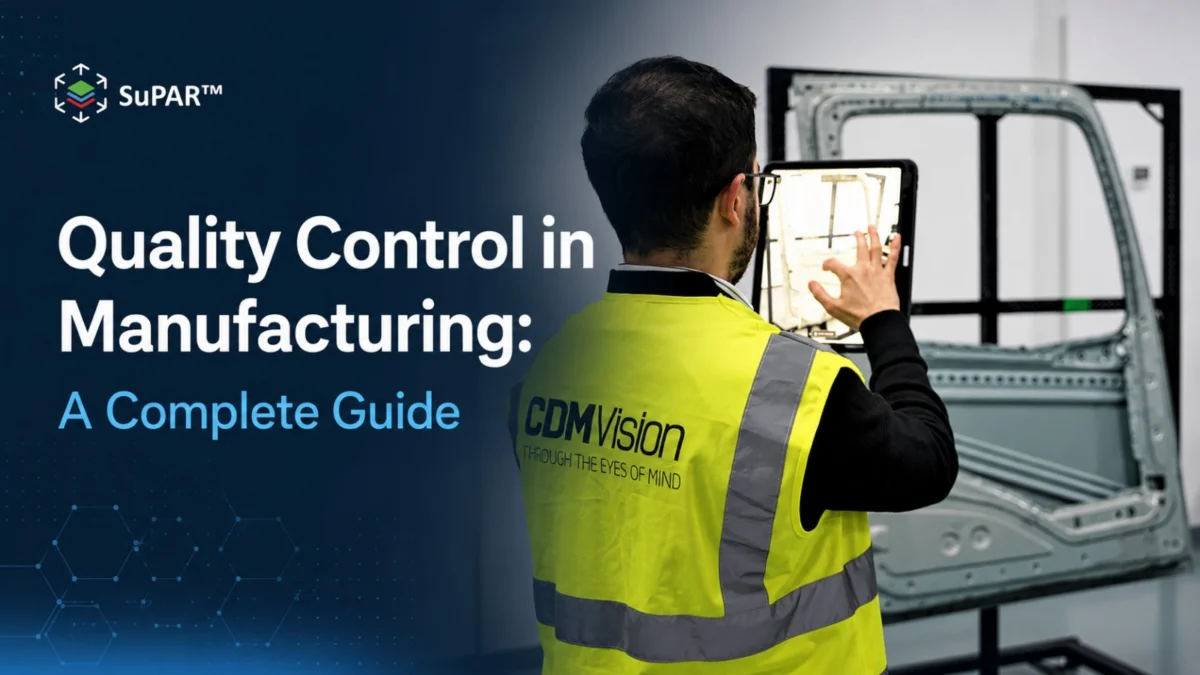
Quality control in manufacturing is the set of processes, methods, and tools used to verify that products meet defined requirements before they reach the customer. Quality control operates at the product level: inspecting, measuring, and testing manufactured output to identify nonconformances and prevent defective parts from moving forward in the production process or reaching end users.
Quality control is one component of a broader manufacturing quality system. It works alongside quality assurance, which focuses on designing processes that prevent defects from occurring in the first place. Understanding how quality control fits within that larger system, what methods it uses, and how technology is changing what it can do, is the starting point for any manufacturing quality strategy.
Why does quality control matter in manufacturing?
Quality control matters because quality issues identified later in the production process can result in higher rework, material, logistics, and customer-related costs.
Quality control in manufacturing creates the verification layer that confirms processes are performing as intended. When quality control data shows a rising rejection rate, it signals that something upstream has changed and corrective action is needed. When quality control records are complete and traceable, they support customer audits, regulatory compliance, and continuous improvement efforts.
Quality control also matters for operational efficiency. Issues found late consume rework labor, consume materials, and disrupt production schedules. A well-structured quality control system, supported by the right tools, can help identify problems earlier and reduce the downstream cost of quality failures.
What are the types of quality control in manufacturing?
Quality control in manufacturing takes several forms depending on when and how inspection is applied:
Incoming quality control (IQC): Inspection of raw materials, components, and subassemblies from suppliers before they enter the production process. IQC can help prevent defective incoming material from propagating through the production system.
In-process quality control (IPQC): Inspection performed at defined stages within the production process, including first-article inspection, patrol inspection, and checkpoint-based inspection at key assembly stages. In-process control allows issues to be identified before a part moves to the next production step.
Final quality control (FQC): Inspection of finished products before shipment or delivery. Final inspection verifies that the completed product meets all required specifications. It is the last opportunity to identify nonconformances before they reach the customer.
Statistical quality control (SQC): The use of statistical methods, including statistical process control (SPC) and acceptance sampling, to monitor production processes and make data-driven decisions about quality. SQC moves quality control from pure inspection toward process monitoring and trend analysis.
What are the key methods and tools for quality control in manufacturing?
Quality control in manufacturing uses a range of methods and tools depending on the product, the inspection requirement, and the production environment:
Visual inspection: Examination of parts by trained operators to identify surface conditions, assembly errors, and cosmetic nonconformances. Augmented reality visual inspection, supported by platforms like SuPAR App, can help make visual inspection more structured and traceable by overlaying CAD geometry and inspection checkpoints directly onto the physical part.
Dimensional inspection: Measurement of part geometry using contact gauging, coordinate measuring machines (CMMs), or non-contact optical measurement systems. Dimensional inspection verifies that critical dimensions fall within tolerance.
Non-destructive testing (NDT): Inspection methods that identify internal or sub-surface conditions without damaging the part. Common NDT methods include ultrasonic testing, X-ray inspection, magnetic particle inspection, and dye penetrant inspection.
Automated optical inspection (AOI): Camera and image processing systems that automatically inspect parts for surface conditions, feature presence, and dimensional attributes.
AI-powered visual inspection: AI-powered visual inspection tools can use deep learning to automate selected and repetitive inspection targets. SuPAR AI focuses on defined applications such as hole verification, spot weld verification, stud inspection, and presence, position, or absence verification.
Functional and performance testing: Testing that verifies a product performs as intended, including leak testing, electrical testing, and load testing for structural components.
What are the challenges of quality control in manufacturing?
Quality control in manufacturing faces several persistent operational challenges:
Inspector variability: Manual visual inspection can produce inconsistent results across operators and shifts, particularly when inspection guidance relies on paper drawings or written checklists that require individual interpretation.
Traceability and documentation: Paper-based quality control records are difficult to search, audit, and analyze. They can be lost, damaged, or incomplete. Digital quality control systems create searchable, linked records that support customer documentation and process improvement.
High-volume inspection: At high production volumes, comprehensive manual inspection can require significant time and quality-control resources. Automated inspection tools can support high-volume inspection coverage for suitable, repetitive inspection targets.
Late identification: Quality issues identified at end-of-line inspection or after shipment can carry higher correction costs than those found in-process. Deploying quality control earlier in the production sequence, including in-process checks supported by AR inspection guidance, can help reduce this cost.
Keeping pace with product complexity: As products and assemblies become more complex, the number of inspection points grows. Managing that complexity requires structured inspection workflows, digital tools, and, where appropriate, automated visual verification for suitable, well-defined inspection targets.
How is technology transforming quality control in manufacturing?
Several technology trends are changing the practical capabilities of quality control in manufacturing:
Augmented reality inspection: AR-guided quality control platforms overlay digital inspection information, including CAD geometry, checkpoints, and pass/fail criteria, directly onto physical parts. This approach, supported by platforms like SuPAR App, helps reduce reliance on paper documents and makes it easier for operators to perform structured, repeatable inspection checks. SuPAR Composer is used to prepare inspection templates from existing CAD data, which are then deployed to operators on the shop floor.
AI-powered visual inspection: Deep learning systems can support automated verification of selected repetitive visual inspection targets by applying consistent evaluation criteria under defined operating conditions. AI quality control works most reliably for well-defined targets in controlled imaging conditions, and performs best when combined with AR-guided human inspection for the checks that require operator judgment.
Digital inspection records: Digital quality-control systems can capture inspection findings and results in searchable digital records, supporting reporting, documentation, and quality analysis.
Real-time process monitoring: Statistical process control tools connected to production data provide ongoing visibility into process performance, supporting earlier identification of process drift before it generates nonconforming products.
How do you build a quality control strategy for manufacturing that works?
A quality control strategy that delivers reliable results in manufacturing typically includes several elements working together:
Defined inspection standards: Clear specifications for what constitutes a conforming product, derived from engineering data, customer requirements, and applicable standards. Without defined standards, quality control inspection has no consistent reference.
Structured inspection workflows: Inspection procedures that specify what to check, in what order, using what method, and against what acceptance criteria. Structured workflows, prepared from CAD data in tools like SuPAR Composer, reduce reliance on individual interpretation and support consistent execution across operators and shifts.
The right inspection methods for each application: Matching the inspection method to the inspection requirement, product characteristics, and production environment. AR-guided visual inspection for assembly checks and complex geometries; automated visual verification for suitable repetitive targets; dimensional measurement for critical tolerances; and NDT for sub-surface integrity where required.
Digital records and traceability: Capturing inspection findings and results in a digital, searchable format that supports customer audits, corrective action processes, and quality trend analysis.
Feedback into process improvement: Using quality control data to identify recurring patterns, understand their process causes, and drive corrective action upstream. Quality control provides feedback that can support quality assurance and continuous process improvement.
Frequently Asked Questions
What is the difference between quality control and quality assurance in manufacturing?
Quality assurance focuses on designing and auditing production processes to prevent defects from occurring. Quality control inspects products to identify nonconformances that have already been produced. QA is process-oriented; QC is product-oriented. Effective manufacturing quality systems run both: QA to reduce the frequency of defects, and QC to verify conformance and generate feedback for process improvement.
How do manufacturers measure quality control effectiveness?
Common quality control metrics include defect rate, first-pass yield, rejection rate, cost of poor quality, and defect escape rate. Trend analysis of these metrics over time shows whether quality control processes are improving or deteriorating. More advanced measurement includes tracking where in the production process issues are found, which helps identify whether they are being caught early enough to limit rework costs.
What are the most common quality control methods in manufacturing?
The most widely used quality control methods are visual inspection, dimensional measurement, statistical process control, automated optical inspection, and functional testing. The right combination depends on the product, the critical quality characteristics, the production volume, and the acceptable cost of escapes. Most manufacturing operations use multiple methods in a layered inspection strategy.
How does augmented reality improve quality control in manufacturing?
Augmented reality visual inspection overlays CAD geometry, inspection checkpoints, and pass/fail criteria directly onto physical parts, guiding operators through structured inspection checks without relying on paper documents. This can help reduce interpretation variability, support more consistent execution across shifts, and capture inspection findings and results digitally during the inspection process. SuPAR App delivers AR-guided quality control on the shop floor using inspection templates prepared from CAD data.
What is the cost of poor quality control in manufacturing?
The cost of poor quality includes scrap, rework, warranty claims, customer returns, expediting costs, and reputational impact. Industry frameworks typically categorize quality costs as prevention costs, appraisal costs, and failure costs. Issues identified at later production stages or after delivery can carry higher correction costs than those found in-process.
SEO Meta
- Meta title: Quality Control in Manufacturing: A Complete Guide
- Meta description: Quality control in manufacturing verifies products meet requirements. Learn the types, methods, tools, challenges, and how AR and AI are changing QC today.
- Slug: quality-control-in-manufacturing-guide
- Focus keyword: quality control in manufacturing
- Format: guide